
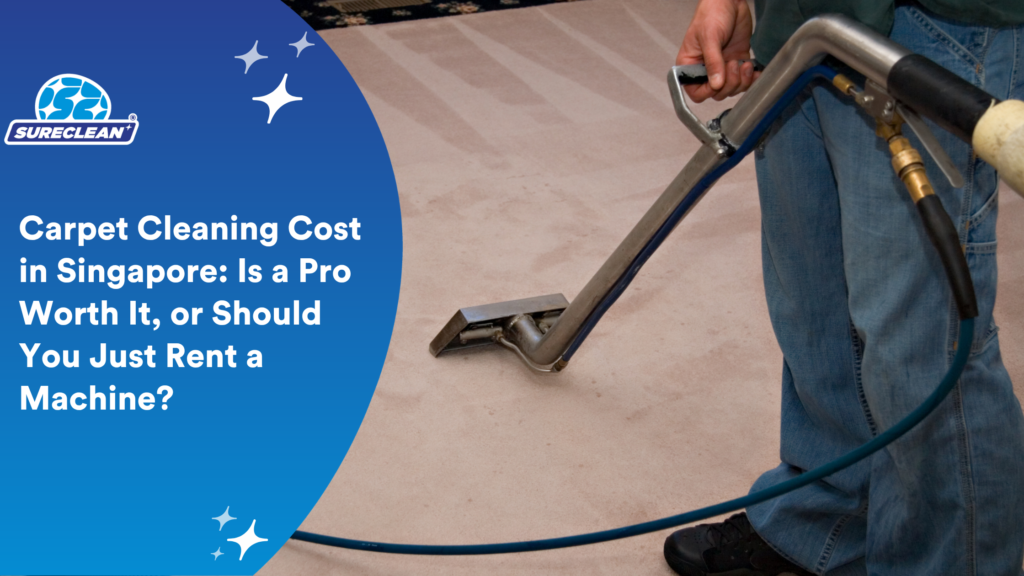

Professional carpet cleaning in Singapore runs about $30–80 for a standard rug, $80–250 for a large area rug, and roughly $3–6 per square foot for fitted wall-to-wall carpet. Whether it’s worth paying for comes down to one thing: what you’re actually fighting.
A light monthly freshen-up? A rented machine handles that fine. Set-in stains, a damp musty smell, mould in the backing, or dust mites in a child’s room are a different story. On those jobs a rented machine usually makes things worse, because the real problem isn’t on the surface. It’s in the padding underneath, where over-wetting plus our humidity turns a clean into a mould farm inside a few days.
We’ve cleaned over 50,000 homes across Singapore with our own employed, trained crews, and carpets are where we see the most expensive DIY mistakes. Here’s the straight version: what the job costs, which method your carpet actually needs, and the times we’d tell you to skip us and rent a machine instead.
How much does professional carpet and rug cleaning cost in Singapore?
Price moves with size, fibre type, and how badly the carpet is soiled. This is the realistic market range to expect:
| Item | Typical Singapore price range |
|---|---|
| Small / medium rug (up to ~2m) | $30–80 |
| Large area rug | $80–250 |
| Wall-to-wall fitted carpet | $3–6 per sq ft (minimum charge often $80–150) |
| Staircase carpet | $5–10 per step |
| Delicate wool / silk / Persian (hand-wash) | Priced per piece — request a quote |
| Post-renovation carpet decontamination | Quoted after inspection |
What pushes a job to the top of the range: heavy pet urine, wine, blood or curry stains; rugs that have to be collected and hand-washed off-site; delicate natural fibres; and, ironically, carpets already over-wet by a rental machine and left to sour. A carpet that’s sat damp for a week costs more to rescue than one cleaned properly the first time. You can see our full scope and book an inspection on our carpet cleaning services page.
Renting a machine vs hiring a pro: the real math
On paper renting wins: $30–60 a day plus solution. That’s not the number that matters. Domestic rental machines are built for light maintenance, not extraction. Their suction is weak, so they push water in far faster than they pull it back out.
Here’s what actually happens on the ground with each option:
| Option | Real cost | Where it quietly goes wrong |
|---|---|---|
| Rent a machine yourself | $30–60/day + your weekend | Weak suction leaves the carpet soaked; backing and padding stay wet; musty smell returns in 3–5 days |
| Cheap freelancer off Carousell | $40–100 | No fibre testing, one-size-fits-all shampoo, often over-wets and disappears if colours bleed or shrink |
| Professional service | $30–250+ | Fibre-matched method, proper hot-water extraction, controlled drying, insured if something goes wrong |
The failure mode barely changes: too much water, not enough extraction. A wet carpet in a humid, aircon-off room is a mould incubator. When people call us after a DIY weekend, they usually pay twice, once for the rental and again for us to strip out the sour smell they made.
Carpet shampoo vs hot-water extraction vs dry encapsulation: which does yours need?
There’s no single “best” method. The right one depends on the fibre, the soiling, and how fast the carpet needs to be back in use:
| Method | Best for | Trade-off |
|---|---|---|
| Hot-water steam extraction | Deep-cleaning synthetic carpets, embedded dirt, allergens, odours | Longest dry time; needs proper extraction to avoid over-wetting |
| Carpet shampoo / bonnet | General refresh, medium soiling | Can leave residue that attracts dirt if not rinsed well |
| Dry / low-moisture encapsulation | Commercial carpet, quick turnaround, humidity-sensitive rooms | Less aggressive on heavy stains and deep grime |
For most Singapore homes with fitted synthetic carpet, hot-water extraction with commercial-grade suction is the gold standard. For an office that can’t afford downtime, or a rug in a room you can’t ventilate, low-moisture encapsulation is often the smarter call. A good cleaner tests the fibre first and tells you which way to go. They don’t run the same machine over everything.
How long does carpet take to dry in Singapore’s humidity?
Plan for 4–8 hours for a properly extracted carpet, and up to 24 hours in a closed, humid room. This is exactly where DIY jobs fail. The humidity here never lets up, so a carpet that’s only “damp to the touch” stays damp, and anything wet past 24–48 hours starts breeding mould and that unmistakable musty smell.
The fix is airflow, not just heat: fans, open windows, or aircon on dry mode, plus proper extraction so there’s barely any water left to begin with. A good crew’s whole job is to leave your carpet as dry as possible, not just as clean as possible.
Why does my carpet smell musty, and can cleaning really remove it?
That damp, musty smell isn’t dirt on the surface. It’s usually mould and bacteria that have taken hold in the backing and padding underneath, where you can’t see or reach them. Air freshener and surface shampoo mask it for a day or two before it comes back.
Real removal means extracting the moisture and treating the source, not spraying over it. This is also why carpets are a genuine health consideration in Singapore homes. Warm, humid conditions make them a reservoir for dust mites, mould spores and allergens, which trigger kids with eczema or asthma. The same humidity works on your other soft furnishings too, which is why we often bundle a carpet job with a mattress cleaning or sofa cleaning service, and check the curtains while we’re there. Those are the other three sponges quietly holding humidity and dust in every home.
Can old coffee, wine, pet-pee and curry stains be removed?
Sometimes, and it depends almost entirely on what you did before you called. The most common way Singaporeans turn a saveable stain into a permanent one is scrubbing it hard with the wrong cloth or an off-the-shelf spray. That drives the stain deep into the fibre and can strip the colour, leaving a bleached patch worse than the original mark.
Fresh spills: blot, don’t rub. Old, set-in stains from pet urine, red wine or curry can often be broken down with the right treatment, but there’s no honest guarantee once the dye has bonded to the fibre. A trustworthy cleaner tells you upfront what’s likely to lift and what won’t, instead of promising a miracle and blaming you when it doesn’t happen.
Do professionals clean delicate Persian, wool, silk and shaggy rugs?
Yes, but a delicate rug should never be treated like a synthetic HDB carpet. Persian, wool and silk rugs are natural fibres that shrink, felt, or bleed dye if you blast them with hot water or a household machine. We’ve seen beautiful hand-knotted rugs ruined at home by someone steaming them or dragging a rental machine over them before bringing them to us.
These pieces get hand-washed with pH-controlled solutions, colour-tested first, and dried flat under controlled conditions, often off-site. If a cleaner quotes you the same flat rate for a silk rug as a nylon carpet without asking a single question about the fibre, that’s your cue to walk away.
After a renovation: get the trapped dust out
If your carpet was down during or right after renovation, it’s holding fine cement and silica dust deep in the pile. That’s the kind you can’t vacuum out and shouldn’t be breathing. Post-reno carpet cleaning is really decontamination, and it pairs naturally with a full post-renovation cleaning so the dust in your aircon coils, window tracks and ledges gets dealt with in the same visit, instead of resettling onto a carpet you just paid to clean.
Red flags of a bad carpet cleaner
If it’s not us, protect yourself. Walk away from anyone who:
- Quotes a flat price without asking about fibre type or seeing the carpet
- Won’t explain their method or drying process
- Carries no insurance if a rug shrinks, bleeds or is damaged
- Leaves the carpet soaking wet and just walks off
- Promises to remove *every* stain with zero caveats
A soaking-wet, sour-smelling carpet a week later is the tell that the job was done with too much water and too little extraction.
How often should you clean your carpet?
For most HDB and condo homes: a professional deep clean every 6–12 months, with regular vacuuming in between. Homes with pets, young kids, or aircon running around the clock (which traps dust and humidity indoors) should lean towards the 6-month end. Offices and high-traffic commercial carpets need it more often.
Frequently Asked Questions
How much does it cost to clean a carpet in Singapore? Expect roughly $30–80 for a standard rug, $80–250 for a large area rug, and $3–6 per square foot for fitted wall-to-wall carpet, with a minimum charge on small jobs. Delicate wool, silk or Persian rugs and post-renovation decontamination are quoted after inspection.
Is it cheaper to rent a carpet cleaning machine than to hire a pro? Only for a light surface refresh. Rental machines have weak suction and tend to over-wet the carpet, leaving the backing damp, which brings back the musty smell within days. For stains, odours or mould, DIY often costs more once you factor in redoing it.
How long does carpet take to dry in Singapore’s humidity? Around 4–8 hours with proper extraction, and up to 24 hours in a closed, humid room. Keep fans running or aircon on dry mode. Anything still wet past 24–48 hours risks mould, which is exactly why over-wetting is the main DIY failure.
Can professional cleaning remove a musty carpet smell for good? Yes, if the moisture and mould in the backing and padding are actually extracted and treated, not just masked with fragrance. Surface shampoo and air freshener only cover the smell for a day or two before it returns from underneath.
Can old coffee, wine, pet-pee or curry stains be removed? Often, but not always. It depends heavily on whether the stain was scrubbed or left to set. Fresh spills should be blotted, never rubbed. Once a dye has bonded to the fibre, an honest cleaner will tell you what’s likely to lift and what won’t.
How often should I get my carpet professionally cleaned in an HDB or condo? Every 6–12 months for most homes, with regular vacuuming in between. Go towards 6 months if you have pets, young children, or run aircon around the clock, since indoor humidity and dust build up faster.
Carpets are one of the few things in a Singapore home where cheaping out can genuinely cost you more. A ruined rug or a mould problem is far pricier than the clean would have been. If you’re not sure whether yours needs a full extraction, a delicate hand-wash, or just a rental machine and an afternoon, tell us what you’re dealing with and we’ll give you a straight answer. Request a quote and we’ll take a look before you spend a cent.
Looking for the service itself? See Sureclean’s carpet cleaning Singapore — NEA Class 3 licensed, 4.9★ from 1,534+ Google reviews, 50,000+ homes cleaned since 2013.

Alvin Tan
Founder & Managing Director, Sureclean
Alvin founded Sureclean in 2013 to bring reliable, professional cleaning standards to homes and businesses across Singapore. Today, Sureclean is NEA Class 3-licensed (NEA240120/6509C/C3/N01), rated 4.9★ across 1,534+ Google reviews, and has served over 50,000 homes across Singapore — backed by S$1,000,000 in public liability insurance and a 400-hour training standard for every crew member.
